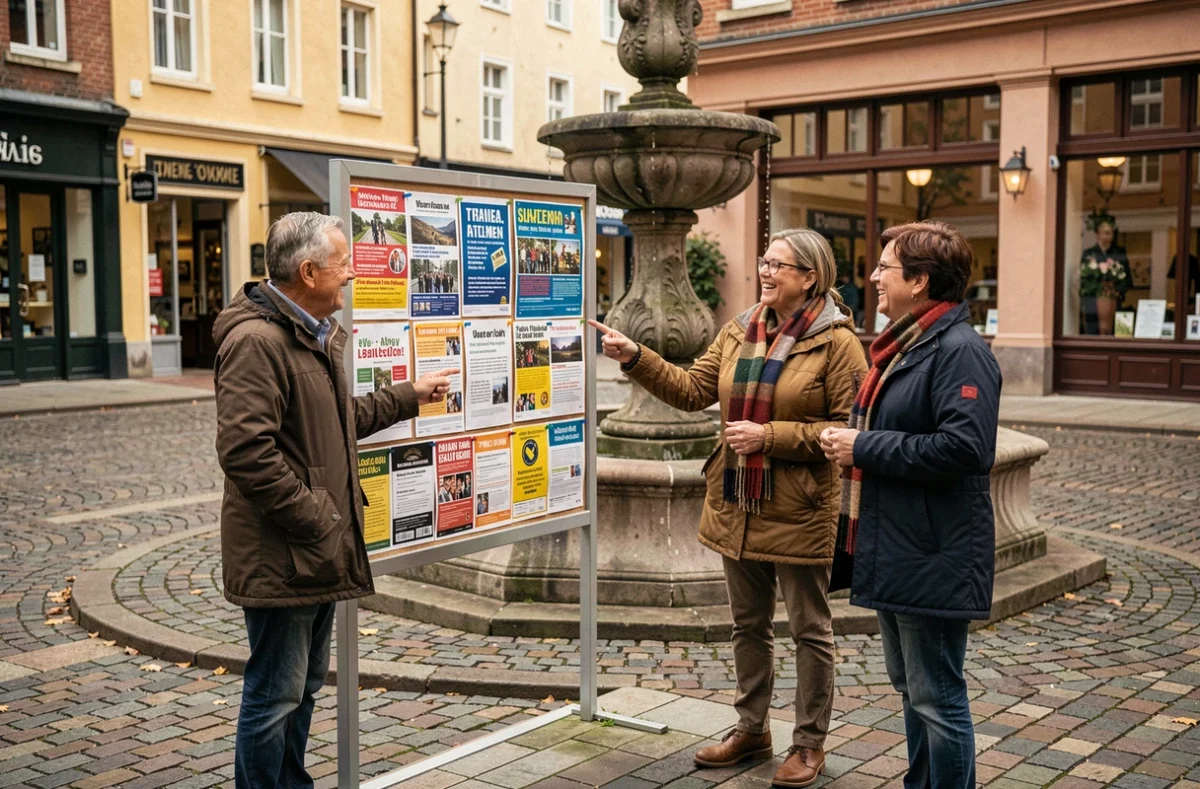
Local news refers to all the information produced and disseminated at the level of a municipality, department, or region. It covers both municipal decisions and cultural, sporting, or community events. Accessing this information requires knowing where to look for it, in what form it circulates, and how it is renewed.
Open data and interoperable agendas: the technical foundation of local information
Local event agendas are no longer solely based on lists created by journalists or tourist offices. An increasing share of information is transmitted through open data platforms directly fed by local authorities.
The national platform DATAtourisme, referenced on data.gouv.fr, disseminates tourist data produced by French territories. Each dataset has an identifiable origin and a date of update. Exports are updated daily, and an API allows developers to reuse this information in third-party applications.
This operation changes the very nature of the local agenda. Instead of a fixed calendar updated manually, we obtain a structured flow where each event (festival, exhibition, guided tour, market) is described according to a standardized format.
Regional platforms like the cultural agenda of Pays de la Loire exploit this model to offer searches by date, by municipality, or by theme. Publications like lagazettedhector.fr fit into this logic by relaying news and events at the local level, with a precise territorial anchoring.

Mobile notifications and municipal applications: how local news reaches your phone
Consulting a website or a paper newspaper remains a voluntary action. The current trend pushes local information towards the phone, without residents needing to search for it.
According to Le Dauphiné Libéré (September 2026), the PanneauPocket app allows municipalities to send notifications directly to residents’ pockets. Municipal decrees, weather alerts, event announcements: the flow of municipal information uses the same channel as personal messaging.
Another app, IntraMuros, takes this logic further. According to Le Dauphiné Libéré, it aggregates events from several neighboring municipalities. A resident of a small rural community can thus access concerts, markets, or public meetings organized within a broader radius, without having to check each town hall’s website.
This pooling responds to a concrete usage: the majority of daily movements exceed municipal boundaries. Shared agendas expand the search beyond the municipality of residence, which better matches local mobility habits.
What these applications really cover
The scope goes beyond traditional cultural outings. Some institutional agendas now include:
- Professional workshops and information meetings organized by local authorities, with registration details and contact information
- Hybrid events, accessible in person or online, which broadens the potential audience well beyond the geographical area
- Regulatory alerts (construction, detours, traffic restrictions) that condition access to the events themselves
Regional event agenda: festivals, exhibitions, and guided tours
The local event offering is structured around recurring appointments, the visibility of which largely depends on the dissemination channel. A jazz festival scheduled in a medium-sized city can attract a regional audience, provided that the information circulates beyond just the organizing municipality’s website.
Departmental tourist offices publish weekly selections, often organized by theme: exhibitions, guided tours of heritage, live performances, craft markets. These selections serve as a useful editorial filter in the face of the raw volume of open data.
The difference between a simple list and a true local agenda lies in three elements:
- The qualification of the event: confirmed date, precise location, access conditions (free, reservation required, accessible for people with reduced mobility)
- Real-time updates, especially for cancellations or postponements related to weather
- The relevant geographical scope, which often exceeds administrative boundaries to align with living areas
A typical weekend in the Auvergne-Rhône-Alpes region or Brittany can simultaneously offer dozens of events within a limited radius. Without a sorting tool by date, distance, or category, the information remains unusable.

Reliability of local information: verify before traveling
An event announced on a social network does not have the same reliability as an event published by a local authority via DATAtourisme. The source determines trust.
Data from institutional platforms carry a date of last update. This is a simple but decisive indicator: an event not updated for several weeks is potentially outdated. Municipal platforms like PanneauPocket or IntraMuros, fed by the town halls themselves, offer a higher level of reliability than Facebook pages or informal groups.
The useful reflex before traveling is to cross-check two sources. An event present on both the tourist office agenda and the municipality’s website is likely to be maintained. An event visible only on a social network, without institutional confirmation, deserves a prior phone call.
The case of hybrid events
In recent years, some local events have offered online participation. Conferences, workshops, information meetings: the hybrid format allows reaching an audience geographically distant. Agendas that specify this modality provide highly valuable information, often absent from simple event listings.
Local news is no longer limited to reading a headline in a regional newspaper. It relies on a technical ecosystem (open data, APIs, mobile applications) and editorial (selections from tourist offices, local media) whose complementarity determines the quality of the information received. The most reliable criterion remains traceability: knowing who publishes, when, and on what basis.