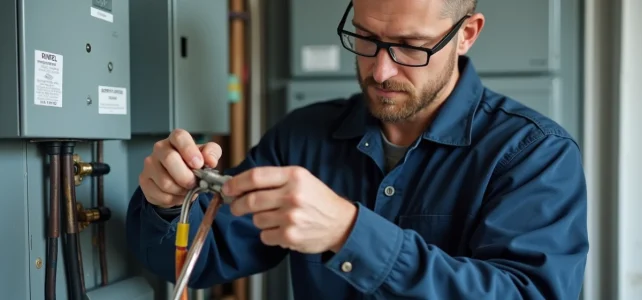
The NF C 15-100 standard regulates all low voltage electrical installations in France, from the distribution board to the last light point. The R2V cable, recognizable by its double PVC insulating sheath, remains the most commonly used rigid conductor for connecting fixed circuits in a home or tertiary building. Understanding how the standard governs its sizing, installation, and protection helps avoid non-compliance during the Consuel inspection.
R2V installed without conduit: what the standard really allows in partitions
Most guides simply state that R2V can be installed “visible or under sheath.” The reality on the ground is more nuanced, and this is precisely where implementation errors appear during renovations.
The R2V can run without conduit in a construction void, for example between a plasterboard and a load-bearing wall, provided that the space is free, accessible, and free from the risk of mechanical damage. The cable must not rub against a metal framework or be trapped between two structural elements that could compress it.
In practice, this means that an R2V cable run behind plasterboard on a metal rail must be protected by a cable entry or kept away from the framework by suitable clips. If the construction void is cluttered with ventilation ducts or pipes, the installation under ICTA conduit becomes mandatory to comply with the NFC 15 100 standard for R2V cable and ensure the longevity of the installation.
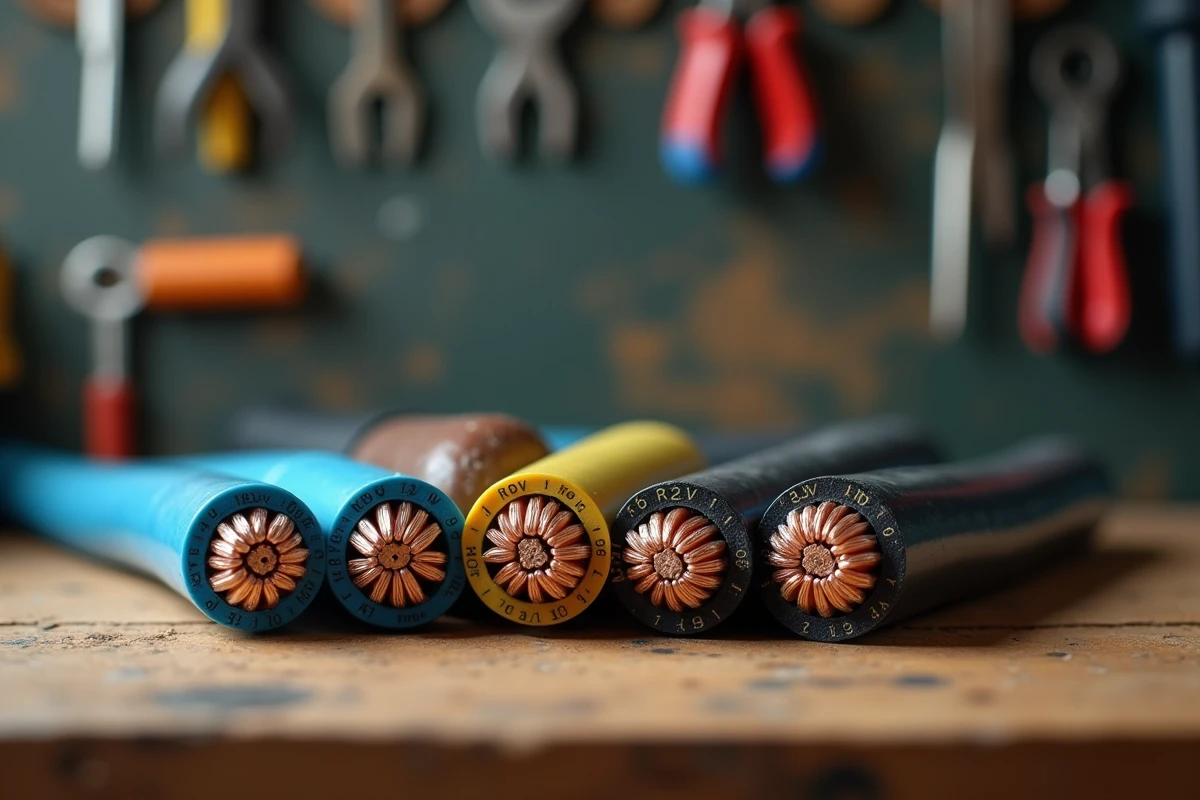
AN3 classification and R2V cable outdoors: a constraint often ignored
The NF C 15-100 classifies external influences to which an installation may be subjected. The AN3 code corresponds to direct exposure to weather conditions (rain, frost, UV radiation). This classification has direct consequences on the choice of cable.
The standard R2V has a black PVC outer sheath that adequately resists UV exposure for moderate durations. However, for outdoor buried installations or exposed aerial runs, the standard requires additional protections:
- When buried, the cable must be placed in a TPC sheath (red or black corrugated sheath) at a minimum depth, with a warning mesh placed above the route
- When visible on a facade, an IRL conduit or a closed trunking protects the R2V against mechanical shocks and accelerated aging due to UV exposure
- In an unheated outdoor technical room, the minimum operating ambient temperature of the PVC must be checked, as PVC becomes brittle under prolonged cold
Ignoring the AN3 classification when choosing the installation method is a common reason for reservations at the Consuel, especially for gate, garden lighting, or outdoor charging station supplies.
R2V cable section according to the circuit: constraints imposed by the standard
The NF C 15-100 sets minimum conductor sections based on the type of circuit and the rating of the circuit breaker that protects it. The R2V comes in several sections, and the choice is not made randomly.
For a standard socket circuit protected by a standard-rated circuit breaker, the standard imposes a minimum copper section. A dedicated circuit (cooking plate, oven, water heater) requires a larger section. Each specialized circuit has its own circuit breaker and its own line from the distribution board, without intermediate branching.
Line length and voltage drop
The minimum regulatory section is not always sufficient. On a long line (distant garage, outbuilding, IRVE charging station at the back of the garden), the voltage drop can exceed the permissible threshold. The standard sets this limit for installations powered from the public network.
When the distance between the board and the point of use exceeds several tens of meters, increasing the section of the R2V one notch above the regulatory minimum remains the most reliable solution. This oversizing also reduces the heating of the cable under load, which prolongs its lifespan.
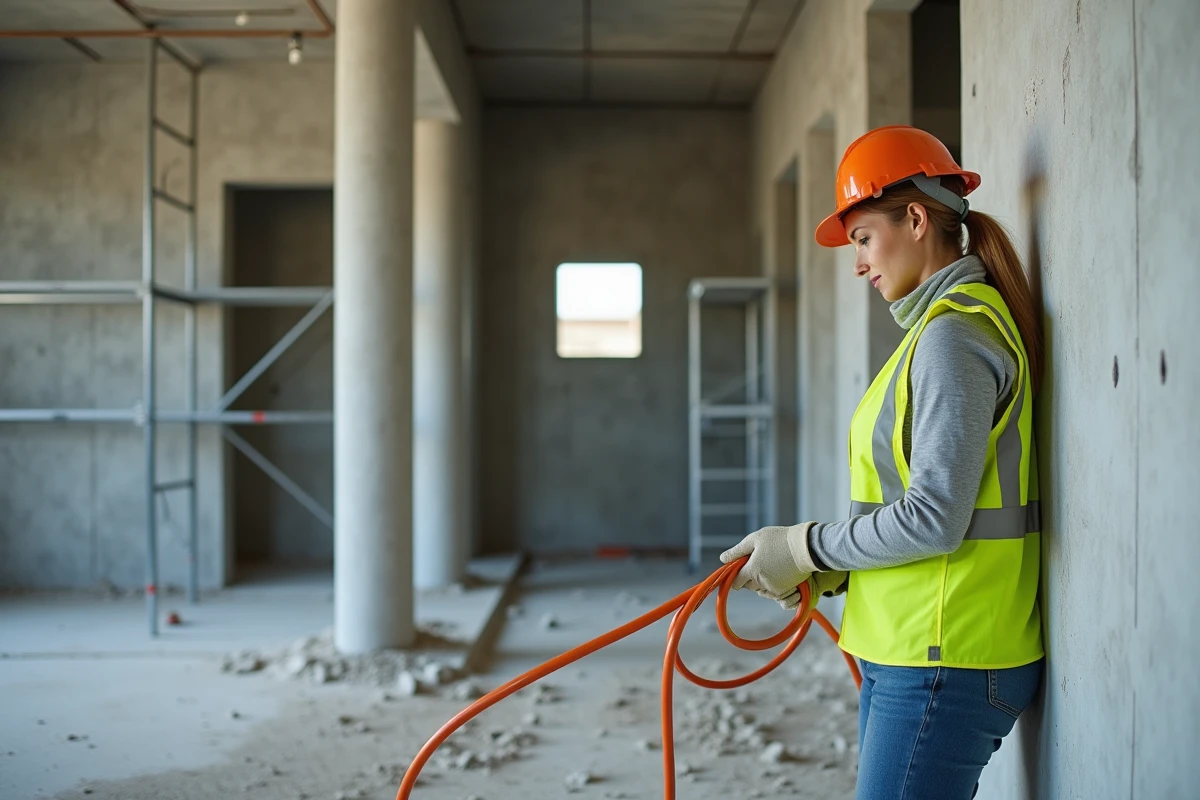
IRVE pre-equipment and self-consumption: R2V facing new uses
The latest wave of changes to the NF C 15-100 incorporates requirements related to electric vehicle charging infrastructures and photovoltaic self-consumption. These two uses modify how the R2V cable is sized and installed in new homes.
For IRVE, the standard requires pre-equipment: a dedicated circuit, individually protected, must connect the electrical panel to the designated location for the charging station. The R2V used on this circuit must support the intended charging power without exceeding the permissible heating limits in the chosen installation mode (embedded, in trunking, in a construction void).
Photovoltaic self-consumption adds an additional constraint: the R2V cable connecting the inverter to the panel must pass through a specific cut-off and protection device. The standard prohibits connecting an inverter to an existing circuit shared with other equipment. A dedicated circuit is required, with protection suitable for the maximum current produced by the solar installation.
- The IRVE circuit must be marked at the panel with a standardized label
- The self-consumption circuit must have an accessible disconnection device without tools
- The R2V used for these two circuits must follow the same conduit-free installation rule as any other circuit (free void, absence of mechanical damage)
These pre-equipment obligations apply to new constructions and major renovations subject to building permits. For a partial renovation, the installer is only required to bring the circuits they modify up to standard, but anticipating the passage of a dedicated R2V cable to the garage or technical room remains a marginal investment that avoids reopening walls later.
The R2V cable remains the physical support for almost all fixed circuits covered by the NF C 15-100. Its compliance does not depend on the cable itself, which is manufactured to standards, but on the rigor of the sizing, installation method, and protection chosen for each circuit. An R2V correctly installed in a free construction void is compliant; the same cable pinched against a metal rail is not.