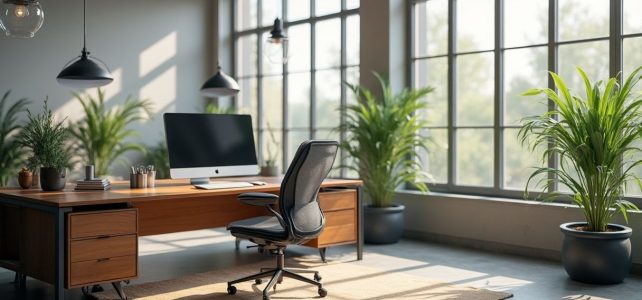
In a constantly evolving professional world, office furniture plays a key role in promoting employee well-being and productivity. Whether in large companies or small coworking spaces, appropriate furnishings can radically transform the work environment. Modern trends not only offer aesthetic solutions but also aim to provide ergonomic and functional designs that meet the diverse needs of users.
Current Trends in Office Furniture
The office furniture market is in perpetual flux, influenced by technological advancements and new employee expectations. These trends reflect the evolution of professional environments and work modes.
- Modular furniture: workspaces are becoming increasingly flexible, and modular furniture allows for easy adaptation of layouts according to current needs. From height-adjustable tables to movable partitions, modularity is at the heart of concerns.
- Eco-friendly design: sustainable materials and environmentally friendly manufacturing processes are increasingly appealing to companies concerned about their ecological footprint. Furniture made from recycled or certified materials is preferred.
- Integrated technology: desks equipped with USB ports, wireless chargers, and cable management solutions facilitate the use of electronic devices and promote connectivity.
Ergonomics and Well-being at Work
Considering the physical and mental health of workers, ergonomics has become an essential criterion when choosing office furniture.
- Ergonomic chairs: they are designed to provide optimal support for the spine and prevent back pain. Adjustable height, tilt, and lumbar support are essential features.
- Height-adjustable desks: this type of desk allows for alternating positions throughout the day, thereby reducing sedentary behavior and improving blood circulation.
- Lighting and acoustics: good lighting and controlled acoustics contribute to employee comfort and their ability to concentrate.
The Impact of Layout on Productivity
A well-thought-out workspace influences not only employee satisfaction but also their daily efficiency.
The configuration of desks can encourage collaboration or, conversely, provide concentration zones for individual tasks. Shared spaces, such as meeting rooms, should be equipped with adequate office furniture to facilitate exchanges and brainstorming sessions. Comfort elements, such as welcoming chairs and relaxation areas, help reduce stress and stimulate creativity.
Customization and Visual Identity
Beyond functionality, office furniture contributes to the visual identity and brand image of the company.
The choice of colors, materials, and finishes helps create an atmosphere that reflects the company’s values. A harmonious workspace enhances employees’ sense of belonging and can attract visitors and partners. The integration of personalized elements, such as artwork or logos, also helps forge a unique and memorable identity.
In today’s professional world, the choice of office furniture is of strategic importance. Investing in modern, ergonomic, and aesthetic solutions becomes a lever for attracting and retaining talent. By combining design and functionality, workspaces become inspiring places conducive to growth and performance.