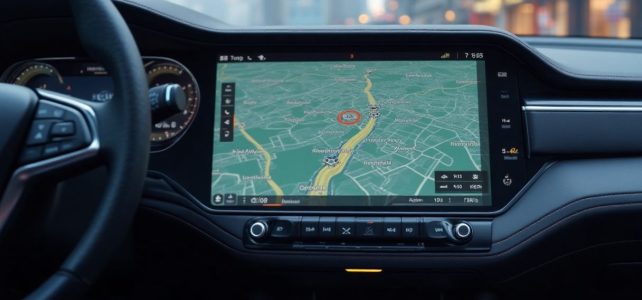
Vehicle geolocation has transformed our approach to fleet management, both in the public and private sectors. This technology, which relies on the use of satellites to accurately track and locate any equipped vehicle, offers considerable advantages in terms of safety, efficiency, and profitability. This innovation not only improves operational management but also serves as a strategic pillar for modern companies seeking to optimize their logistics and reduce their costs.
The technological foundations of geolocation
Geolocation relies on advanced technologies that allow for real-time tracking of vehicles. By combining sophisticated GPS devices and communication systems, this technology offers unprecedented accuracy.
- GPS and tracking software: the global positioning system (GPS) is the very core of geolocation. It uses a network of satellites to provide precise information about a vehicle’s location.
- Real-time communication: for geolocation to be effective, it must enable continuous communication. Data is relayed to a central server, allowing for constant and immediate monitoring.
- Data processing software: these tools analyze the received information to generate detailed and useful reports for fleet management.
The undeniable advantages of vehicle geolocation
The benefits of adopting geolocation are numerous and varied, impacting security, cost, and operational efficiency.
- Improvement of safety: real-time tracking allows for quick responses in case of theft or mechanical incidents, ensuring increased safety for drivers and vehicles.
- Reduction of costs: optimized route and stop management reduces fuel consumption and vehicle wear, resulting in significant savings.
- Operational efficiency: the ability to instantly locate a vehicle improves responsiveness and route planning, thereby increasing customer satisfaction.
- Compliance with regulations: through better management of driving and rest times, companies can more easily comply with existing regulations.
The challenges and stakes of implementation
Although geolocation offers many advantages, it is not without challenges. Companies must overcome certain obstacles to fully leverage this technology.
The first challenge lies in the protection of personal data. With the collection of vast amounts of information, respecting the privacy of drivers is a major concern. The obligation to comply with data protection regulations, such as GDPR, imposes restrictions on how information is collected and used.
Next, technological integration can prove complex. For the geolocation system to function effectively, it must be compatible with the company’s existing infrastructure, which may require substantial technological and human investments.
Towards a connected and sustainable future
Vehicle geolocation is a cornerstone for future initiatives in intelligent and sustainable transport. As cities around the world move towards more connected and eco-friendly models, geolocation plays a central role in this transition.
It allows for resource optimization that helps reduce carbon footprints by minimizing unnecessary trips and improving the energy efficiency of vehicles. In the long term, these practices can promote the adoption of cleaner technologies, such as electric vehicles, in line with global emission reduction goals.