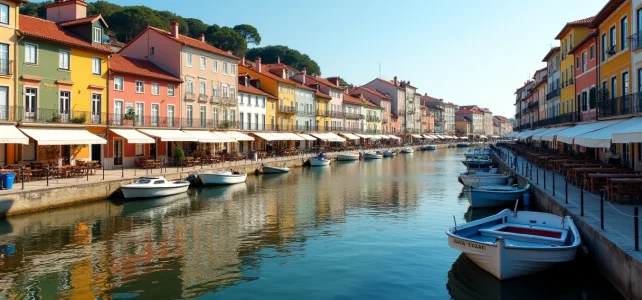
Traditional waterfront homes in Portugal captivate with their authentic character and picturesque aesthetics. Nestled along the canals of Aveiro or on the banks of the Douro in Porto, these colorful houses tell a rich story of maritime traditions and local craftsmanship.
The facades adorned with ceramic tiles, known as azulejos, reveal intricate patterns inspired by the sea and daily life. The simple yet charming architecture, often surrounded by bucolic landscapes, offers a valuable glimpse into a time when the connection with water defined the rhythm of life for communities.
The architectural features of traditional waterfront homes
Traditional waterfront homes in Portugal stand out for their rich and varied architectural diversity, reflecting local history and resources. These houses embody a unique cultural heritage, often overlooked by foreign visitors.
Basalt Houses (Azores): These buildings are constructed from local volcanic stone. Their robust appearance and original beauty make them valuable witnesses to island architecture.
Santana Houses (Madeira): Representative of the island of Madeira, these triangular wooden houses with thatched roofs are iconic. They stand out for their traditional construction and unique aesthetic.
Minhota House: Typical of the Minho region, this house is characterized by its wooden balconies used for drying. Its architecture reflects the agricultural practices of the area.
Serrana House: Simpler than the Casa Minhota, the Casa Serrana is common in the mountainous areas of Minho, Trás-os-Montes, and Beiras Alta and Baixa.
Wooden Houses: Predominantly found in the coastal areas of central Portugal, these wooden constructions are characteristic of maritime regions.
Schist Houses: Spread across 27 villages, these schist houses cover a territory of 5,000 km², offering authentic and sustainable architecture.
Saloia House: Built of earth or limestone, the Casa Saloia is typical of the surroundings of Lisbon. It exudes rustic and authentic charm.
Alentejan Mountains: These single-story houses, situated on large properties in Alentejo, are distinguished by their rectangular shape and harmonious integration into the landscape.
Casas de Povoado: Typical of Alentejo villages, these homes are arranged continuously along the streets, creating a distinctive architectural unity.
Houses in the Algarve: Characterized by their Moorish elements, including roofs, terraces, and ornate chimneys, these houses reflect the historical influence of the region.
A simple ad such as ‘Small fisherman’s house for sale in Portugal’ can spark the desire to discover these architectural treasures, witnesses to ancestral know-how and a lifestyle oriented towards water. 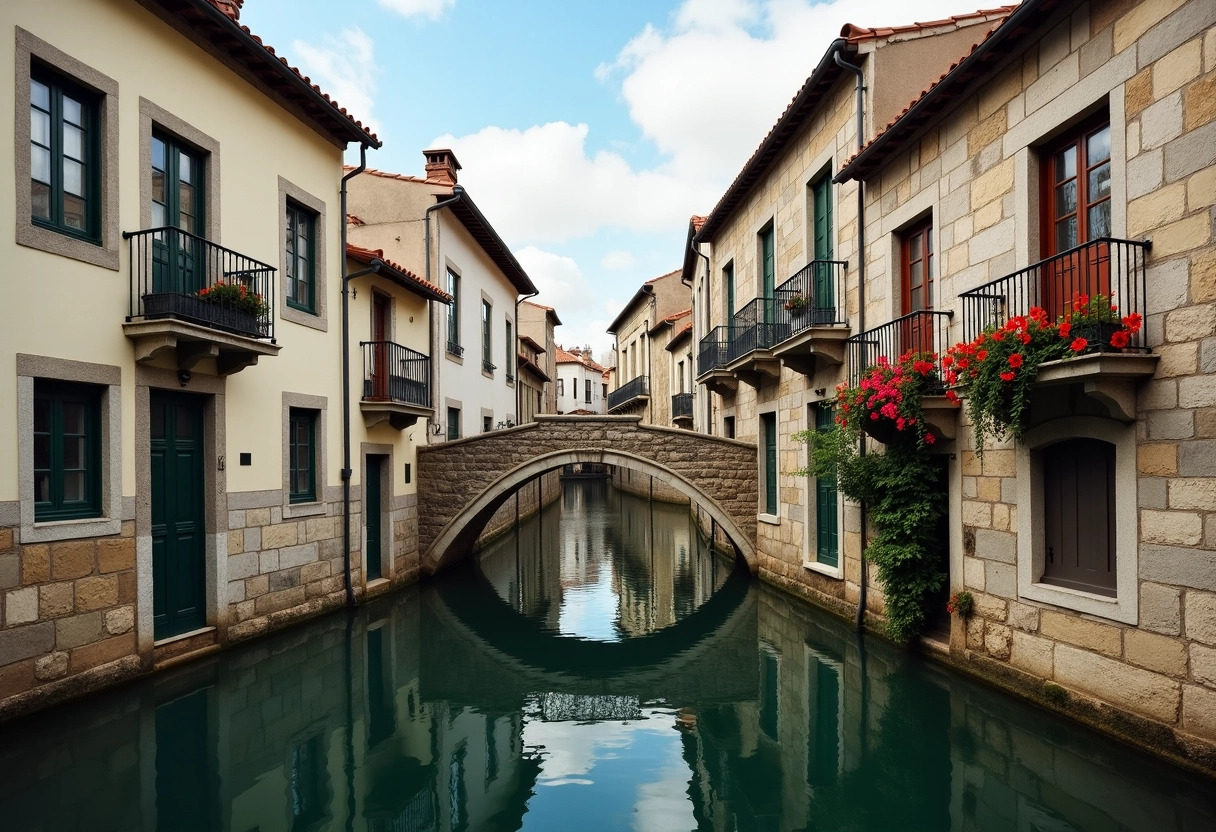
The emblematic regions and their typical homes
Portugal, rich in its regional diversities, offers a variety of traditional homes that embody the unique charm of waterfront dwellings in Portugal. Each region adds its distinctive touch, shaped by history, climate, and local resources.
The North
- Minhota House: Typical of Minho, this house with its wooden balconies was once used for drying agricultural products.
- Serrana House: Simpler, this house is found in the mountainous areas of Minho, Trás-os-Montes, and Beiras Alta and Baixa.
- Carenhas of High Minho: Granite constructions used by shepherds as temporary shelters.
The Center
- Wooden Houses: Spread across the coastal areas of the center, they are characteristic of maritime regions.
- Schist Houses: Present in 27 villages across 5,000 km², they represent sustainable and authentic architecture.
- Saloia House: Built of earth or limestone, it is typical of the surroundings of Lisbon and exudes rustic charm.
The Alentejo
- Alentejan Mountains: Single-story, rectangular houses situated on large agricultural properties.
- Casas de Povoado: Aligned along the streets, these houses form typical villages of Alentejo.
The Algarve
- Houses in the Algarve: Influenced by Moorish elements, these houses are distinguished by their roofs, terraces, and ornate chimneys.
Each region of Portugal is thus marked by its architectural heritage, offering a deep dive into the history and culture of the country.